
EB-5 Conditional Green Card: Rules and Removal of Conditions (Form I-829)
The green card an EB-5 investor receives at the end of the immigrant visa process is not the final document. It is a conditional green card, valid for two years, with a condition attached that has to be cleared later. The card looks and functions much like any other permanent resident card, but the status behind it is provisional in one specific sense: USCIS will review the investment a second time and decide whether the conditions should come off.
That second review is where a surprising number of investors lose focus. The visa has been issued, the move has been made, the family is settled, and the two-year clock is quietly running. What follows is a plain explanation of what conditional status means, how the two-year period works, how removal of conditions is filed, and what happens in the years after.
What “Conditional” Means on an EB-5 Green Card
EB-5 investors receive a conditional visa valid for two years. The condition exists because the program is not simply a purchase of residency. Congress wanted a mechanism to verify, after the fact, that the investment actually did qualify for EB-5 Program.
During the conditional period, the investor holds permanent resident status with nearly all of the practical rights that come with it. The distinction is that the status depends on meeting the program requirements, and the investor must later demonstrate to USCIS that those requirements were met. Nothing converts automatically at the end of the two years. Removal of conditions is a filing, with evidence, a fee, and a separate adjudication attached to it.
This is why experienced advisors treat the conditional green card as the midpoint of the process rather than the finish line. The investor’s obligations do not end when the card arrives. In many ways, the most document-intensive part of the EB-5 journey begins at that moment.
The Two-Year Validity Period and What Has to Happen During It
Conditional green cards are valid for two years. During that period, several things need to be true, and they need to be provable with documentation rather than simply true in spirit.
-
The qualifying investment must remain in place and at risk in the NCE as the program requires.
-
The job creation requirement must be satisfied. USCIS materials reference the creation of at least 10 full-time jobs as part of the conditions that must be met during the conditional period.
-
The investor must comply with the rules and regulations that apply to anyone holding permanent residency, conditional or otherwise.
-
Records must be preserved by the project. Payroll records, tax documents, business filings, and evidence from the project all matter when the petition to remove conditions is assembled.
Investors who rely on a regional center or a project sponsor to hold this documentation sometimes discover, two years later, that the evidence is thinner than expected. Asking early what the project will provide, in what format, and on what schedule is a reasonable question to put to any sponsor before committing capital.
Removing Conditions with Form I-829
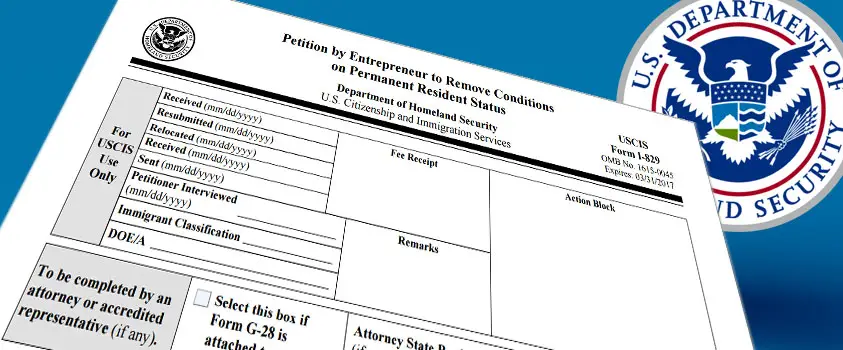
Form I-829 is the petition EB-5 investors use to remove the conditions on their permanent residence. It is specific to the investor category. Form I-751 covers conditional permanent residents in other categories, most commonly marriage-based cases, which is why USCIS announcements often address the two forms together.
The purpose of the I-829 is to show that the investor sustained the investment and that the required economic activity occurred. Approval results in an unconditional permanent resident card. A denial, depending on the circumstances, can place the investor in removal proceedings, which is why the petition is not a formality to be handled casually.
The Filing Window Runs from 21 to 24 Months
USCIS expects the petition to remove conditions to be filed between 21 and 24 months after the investor receives conditional status. The relevant date is the date the conditional green card was issued, not the date the investment was wired or the date the I-526 was filed. Investors who mark the wrong anniversary on the calendar create avoidable problems for themselves.
Because the filing window is narrow and the consequences of missing it are serious, the practical approach is to begin assembling evidence well before the window opens. Documentation requests to a project sponsor can take months. Starting the process at month 18 rather than month 23 leaves room to chase missing records. Investors should confirm the current filing rules, fee amounts, and any updated instructions directly on the USCIS website, since these details change.
What Happens While the Petition Is Pending
On Nov 18, 2025, USCIS extended green card validity for conditional permanent residents with a pending Form I-751 or Form I-829. This matters because processing times can run past the two-year expiration date printed on the card. The extension is designed so that investors whose petitions are still pending are not left without proof of their status while they wait for a decision.
Even with that protection in place, investors should keep a complete copy of every filing, receipt notice, and decision in a location they can access from anywhere. When the card expires and the petition is pending, having clean records makes travel, employment verification, and driver’s license renewals far less complicated. The precise evidence USCIS accepts in a given situation should be confirmed against current agency guidance rather than assumed.
Conditional Versus Permanent Green Card
The two documents look similar and confer similar day-to-day rights, but the underlying status is different in ways that matter for planning.
|
Point of comparison |
Conditional green card |
Permanent (unconditional) green card |
|---|---|---|
|
Validity period |
Two years from issuance |
No two-year review condition attached |
|
What the status depends on |
Meeting the EB-5 requirements during the conditional period, including the job creation requirement |
Maintaining permanent residence status and complying with the rules that apply to permanent residents |
|
How the investor moves forward |
Files Form I-829 to remove conditions |
Files a naturalization application if and when eligible and chooses to pursue citizenship |
|
Where the case stands with USCIS |
Subject to a second review after the initial approval |
Conditions have already been removed by USCIS |
Rules That Apply Once You Hold the Card
Once an EB-5 investor receives permanent residency, whether conditional or unconditional, that investor must follow the rules and regulations attached to the status. Those rules are not unique to EB-5. They apply to permanent residents generally, and they are worth reviewing with an immigration attorney rather than learned from internet summaries.
The practical habits that protect investors are unglamorous. Keep a permanent address on file with USCIS and update it when it changes. Keep documentation of the investment and the jobs created in an organized file. Respond to any USCIS correspondence on time. Avoid long absences that could raise questions about whether the United States is genuinely the investor’s place of residence, and get advice before extended travel rather than after.
Where Removal of Conditions Goes Wrong
Denials at the I-829 stage rarely come out of nowhere. They usually come from gaps that were visible months earlier and simply were not addressed. The recurring themes include missing or inconsistent documentation showing that the investment was sustained, inadequate evidence of the required job creation, and changes in the project’s structure that were never properly documented.
The other common failure is timing. Investors who treat the petition as paperwork to be handled the week the window opens, rather than a project to be prepared in advance, frequently find themselves filing with an incomplete record. That is a poor position to be in when the burden of proof sits with the investor.
The Path to Citizenship After EB-5
Conditional residence is still residence, and time spent as a conditional permanent resident is counted toward the continuous residence that naturalization requires. Citizenship, however, is never automatic. It requires an application and satisfaction of the eligibility rules in effect at the time of filing, and those rules should be confirmed with USCIS or counsel before relying on any timeline.
Investors who plan to naturalize should keep the same records discipline they used for the I-829. A clean immigration history, documented residence, and complete tax compliance make the naturalization stage straightforward. Sloppy records from the conditional period can follow an investor for years.
Why Independent Guidance Matters at This Stage
As an independent EB-5 investment broker, attorney, and FINRA registered securities professional, I work with foreign investors on project evaluation and risk assessment. My practice is built around candid disclosure, including the parts of EB-5 that sponsors and agents rarely emphasize: the program is expensive, the investment is not going to be profitable, and repayment of capital is not assured. Because the EB-5 conditional green card ties immigration status to a project that must meet job-creation requirements, a weak offering can jeopardize both the money and the visa. That is why I have put together a checklist to verify the viability of a project.
Advisory work covers project due diligence, the economics behind job creation claims, and preparation for the removal of conditions stage. The practice also supports H-1B, F-1, and E-2 visa holders converting to permanent residency.
Frequently Asked Questions
How long is an EB-5 conditional green card valid?
The card is valid for two years from the date it is issued. During that period the investor holds conditional permanent resident status and must continue to meet the EB-5 requirements, including the job creation requirement associated with the investment. Removal of the conditions is a separate filing made later, and it does not happen automatically when the two years end.
When do I file to remove the conditions? VERY IMPORTANT
USCIS requires the petition to remove conditions to be filed between 21 and 24 months after the investor receives conditional status. The clock starts from the date the conditional green card was issued, not from the date funds were invested. Because the window is narrow and evidence gathering takes time, preparation should begin months before it opens. If you miss the deadline you may lose the benefit of removal of conditions and your green card.
What happens if my card expires while my petition is pending?
On Nov 18, 2025, USCIS extended green card validity for conditional permanent residents with a pending Form I-751 or Form I-829 for 48 months. This addresses the situation where processing runs past the expiration date printed on the card. Investors should confirm the current mechanics and accepted evidence directly with USCIS, since procedural guidance is updated periodically.
Do I have to create jobs to keep my green card?
The conditions that must be met during the conditional period include creating at least 10 full-time jobs. Evidence of that job creation is part of what the investor must demonstrate when petitioning to remove conditions. Because the burden of proof rests with the investor, confirming early what the project will document and when is a sensible step. Therefore, when selecting your project you should review job allocation report very carefully.
Does time as a conditional resident count toward citizenship?
Conditional permanent residence is still permanent residence, and time spent in that status is counted toward the continuous residence naturalization requires. Citizenship is not automatic, however. It requires an application and satisfaction of the eligibility rules in force at the time of filing, which should be confirmed with USCIS or an immigration attorney.